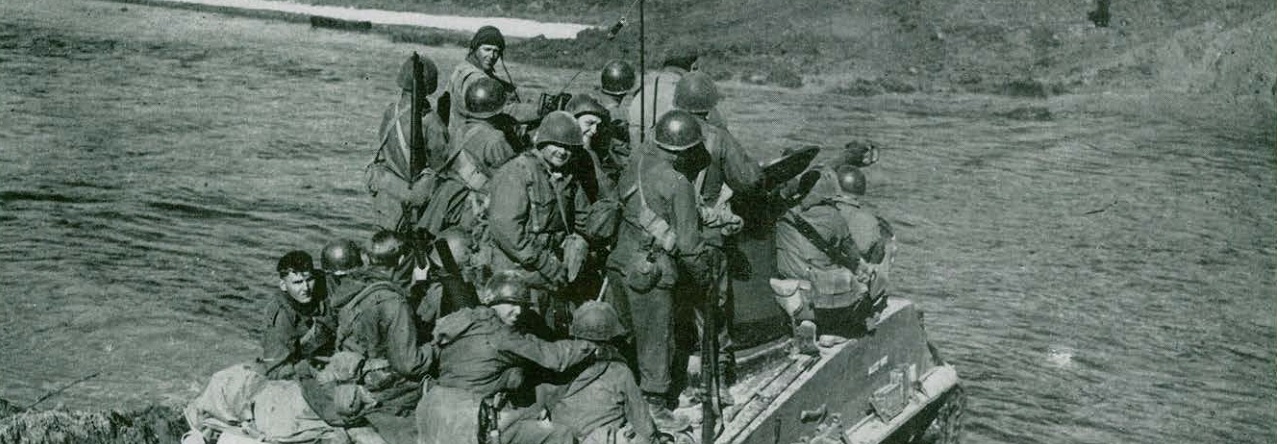
The rather quick march of the 71st continued into the first full weeks of December. The foothills were beginning to give way to the Low Vosges mountains and the hills and lowlands were growing in size to become ridges and valleys. Fighting was less about darting from farmstead to farmstead and more about taking ground ridge by ridge as they advanced.
December 4
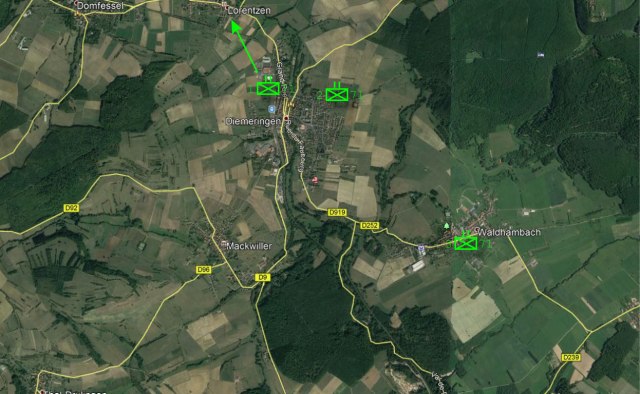
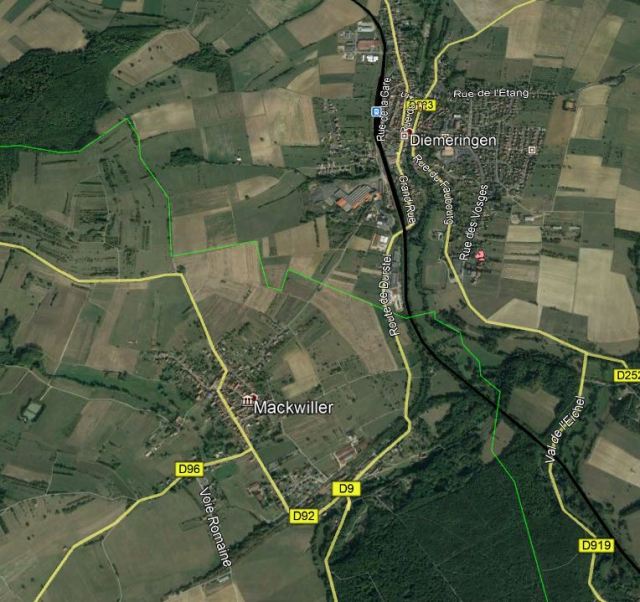
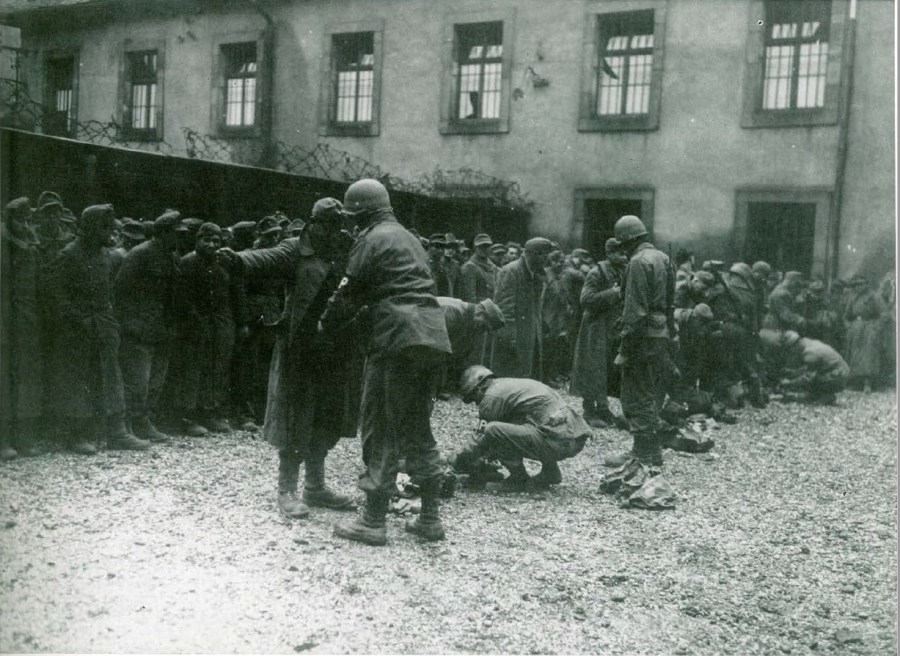
The weather was continuing to change and while the 4th began pleasant it soon turned into rain and snow making for a muddy march from the area around Mackwiller into the town of Diemeringen. As this was a considerably larger town, the fighting was slow as the men mopped up remaining resistance and taking prisoners. First battalion and a portion of second were engaged in patrols to the north, skirmishing with Germans who were occupying the town of Lorentzen. Third battalion was trucked to the east to the area of Waldhambach where they secured the village through the evening and overnight hours.
December 5
Third battalion continued to hold their position in Waldhambach. First battalion had a mission that started early: take the town of Lorentzen. Attaching to elements of the 4th Armored Division, they pushed into and took the town, routing the German resistance by that afternoon. The battalion, along with the 25th Cavalry Recon patrolled the town.
Behind them, the Regimental command post relocated to Diemeringen, along with the rest of 2nd Battalion.
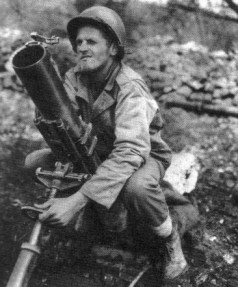
Also of note, Company C of the 99th Chemical Mortar Battalion was attached to the 71st, ostensibly to support taking the next objective, the town of Ratzwiller.
December 6
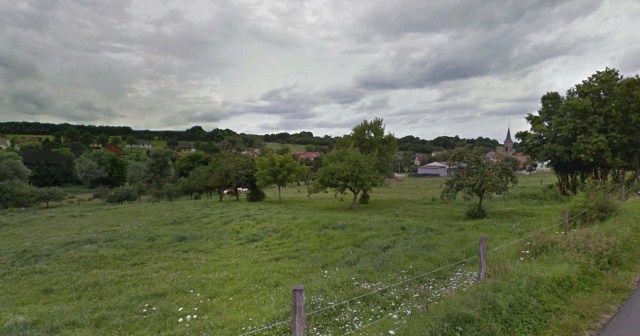
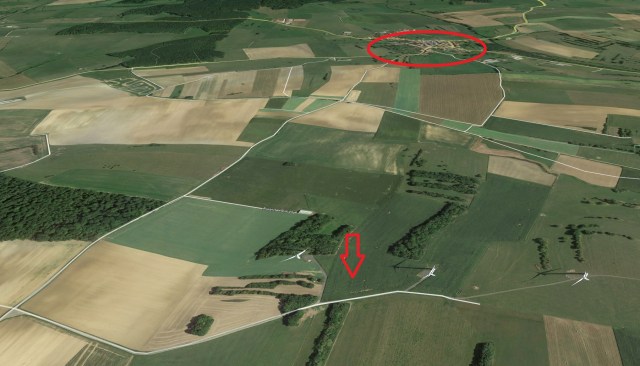
1st and 3rd Battalions remained in place. 2nd Battalion, along with the attached mortar company, was ordered to move up and garrison the town of Butten. From this location they could harass and soften up the defending Germans in Ratzwiller, a small town situated on a high hilltop with commanding views of the valley to the west and the forested mountains jutting up to the northeast.
December 7 – Three year anniversary of Pearl Harbor
December seventh dawned with more cold rain. Into the muck went 1st and 2nd Battalions to assault Ratzwiller and take it from the Germans. This maneuver was no doubt a difficult one as there was only one way to approach the town. Through the conditions and exposed assault, the battalions took the town by late afternoon, suffering no casualties.
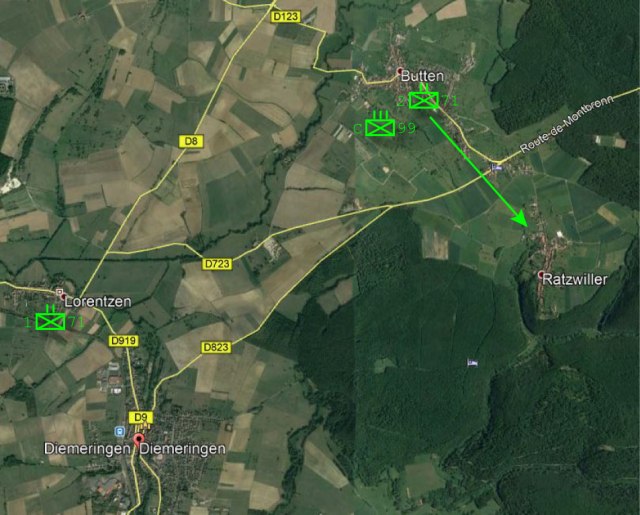
Behind the assault of Ratzwiller, the Regimental command post moved up to Butten that same afternoon.
December 8
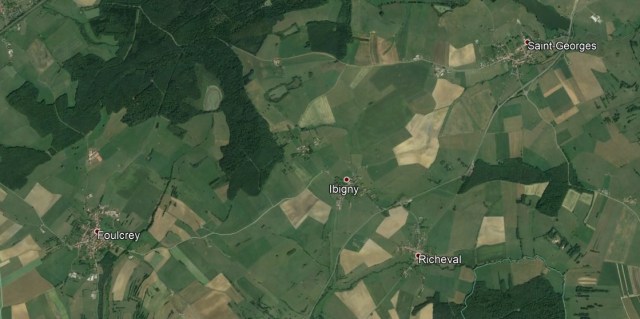
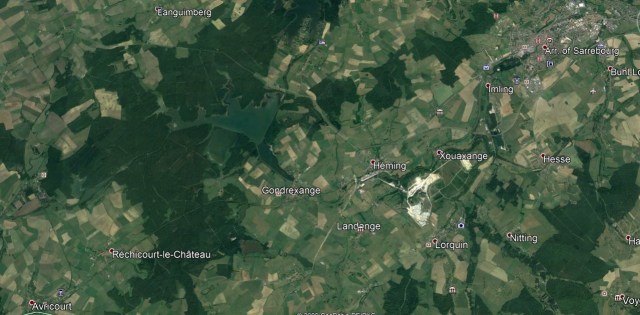
(Author’s note: The entry for this day was extremely confusing. The notations simply stated that all units “recon of conc area 072213 Dec.” Based on the movements over the last 24-48 hours, where they ended up next, and looking at the area in Google Earth I am fairly confident that this interpretation is correct.)
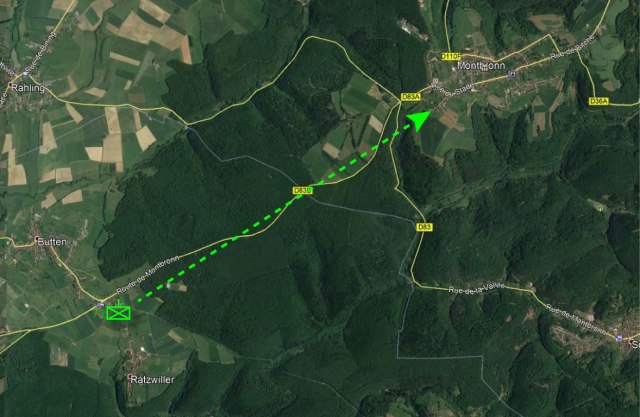
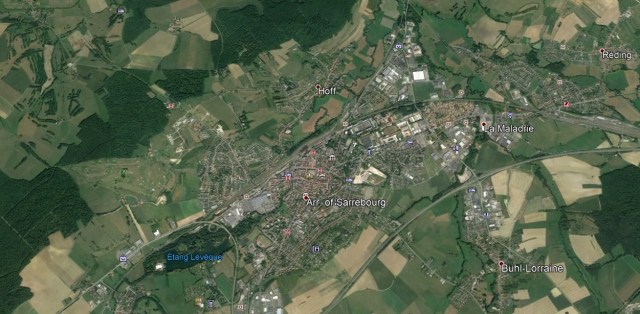
The morning of December 8th all units of the 71st were ordered by the 44th Infantry Division to scout the route from Ratzwiller/Butten along the road to Montbronn. This area is heavily forested, rugged, and had the potential to be a dangerous route for the 71st and other nearby units to take. This flank had to be secured, however, so the Sixth Army units to the north could continue their push through the valley to Rombach and Sarreguemines. Thankfully, no resistance was encountered and all units returned to Butten late in the afternoon. There they said a goodbye to the men of the 99th Mortar as they were being attached to the 114th Regiment.
December 9
This day brought more rain, snow, and mud to the Low Vosges. The 71st departed Butten in trucks and moved into the town of Montbronn, garrisoning it as a new assembly area for multiple units of the 44th Division. All units were in place and the Command Post was opened by the early evening. The next morning the Regiment would be taking it’s place along the new front lines.

 The men afflicted by this condition had to be pulled off the line, warmed up, cleaned up and treated until the skin had healed. In extreme cases, the dead skin would need to be surgically removed. By all accounts, it was a painful condition as the circulation and feeling returned to the affected areas.
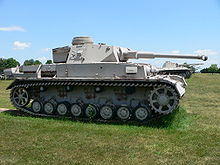
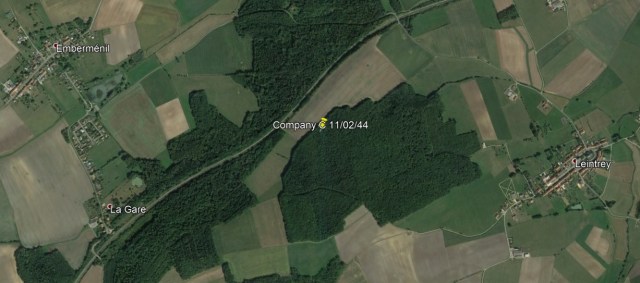 For the first time in the reports we have a direct enemy attack on the 71st. The HQ Company of 2nd Battalion reported a tank attack with heavy artillery fire. The attack was broken up by friendly artillery.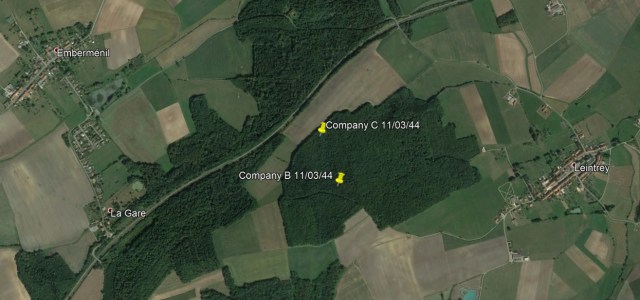
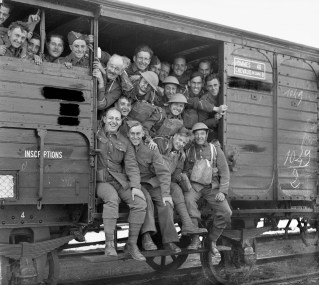 On October 10th, Dan and the men of the 71st were introduced to European travel by way of the “40 and 8” box car. This narrow-gauge boxcar was “given” its name based on the stenciled capacity on the side: “40 Hommes/8 Chevaux” or “40 men/8 horses”. The men were crammed into these boxcars like these British soldiers (note the stencil to the left and above the door).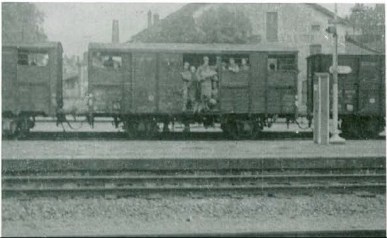
 Pro Aris et Pro Focis