Dec 4 – 9, 1944

The rather quick march of the 71st continued into the first full weeks of December. The foothills were beginning to give way to the Low Vosges mountains and the hills and lowlands were growing in size to become ridges and valleys. Fighting was less about darting from farmstead to farmstead and more about taking ground ridge by ridge as they advanced.

December 4

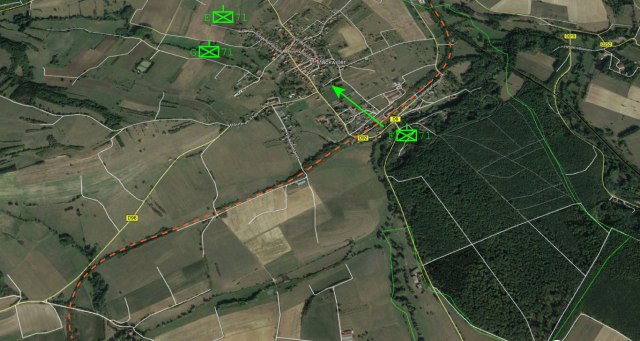
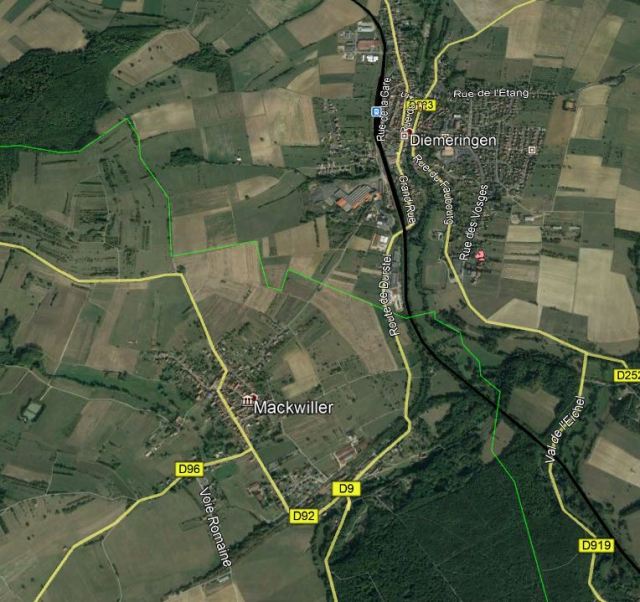
The weather was continuing to change and while the 4th began pleasant it soon turned into rain and snow making for a muddy march from the area around Mackwiller into the town of Diemeringen. As this was a considerably larger town, the fighting was slow as the men mopped up remaining resistance and taking prisoners. First battalion and a portion of second were engaged in patrols to the north, skirmishing with Germans who were occupying the town of Lorentzen. Third battalion was trucked to the east to the area of Waldhambach where they secured the village through the evening and overnight hours.
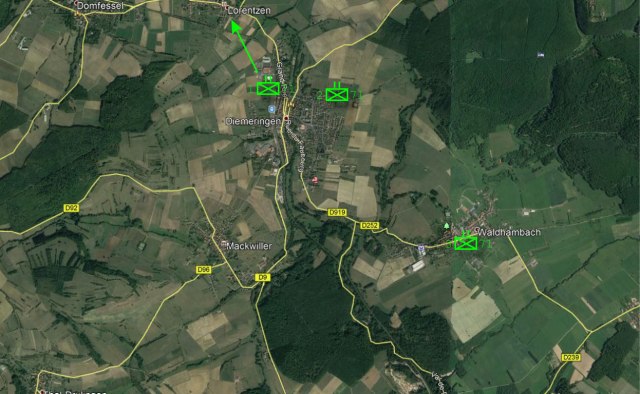
Dec4-44
Click to enlarge

December 5

Third battalion continued to hold their position in Waldhambach. First battalion had a mission that started early: take the town of Lorentzen. Attaching to elements of the 4th Armored Division, they pushed into and took the town, routing the German resistance by that afternoon. The battalion, along with the 25th Cavalry Recon patrolled the town.

Behind them, the Regimental command post relocated to Diemeringen, along with the rest of 2nd Battalion.
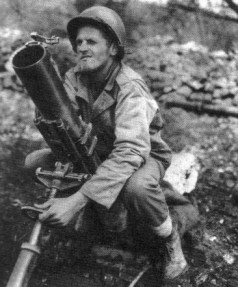
Mortar_4.2_Inch_Chemical_M2_1943
M2 4.2 inch “Four Deuce” mortar

Also of note, Company C of the 99th Chemical Mortar Battalion was attached to the 71st, ostensibly to support taking the next objective, the town of Ratzwiller.

December 6

1st and 3rd Battalions remained in place. 2nd Battalion, along with the attached mortar company, was ordered to move up and garrison the town of Butten. From this location they could harass and soften up the defending Germans in Ratzwiller, a small town situated on a high hilltop with commanding views of the valley to the west and the forested mountains jutting up to the northeast.

December 7 – Three year anniversary of Pearl Harbor

December seventh dawned with more cold rain. Into the muck went 1st and 2nd Battalions to assault Ratzwiller and take it from the Germans. This maneuver was no doubt a difficult one as there was only one way to approach the town. Through the conditions and exposed assault, the battalions took the town by late afternoon, suffering no casualties.
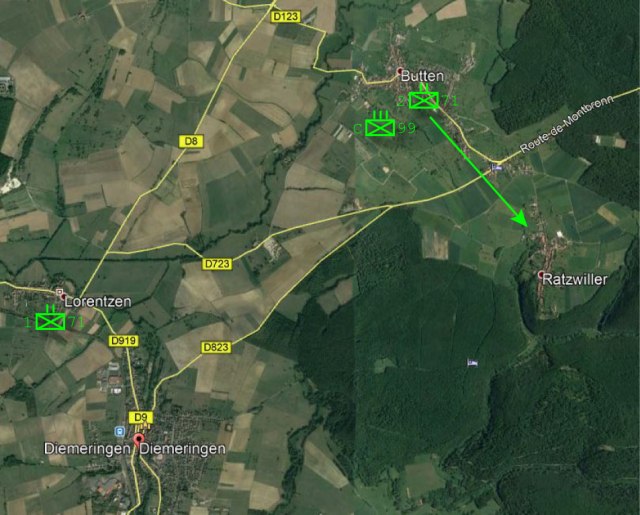
Dec-6-44
Click to enlarge

Behind the assault of Ratzwiller, the Regimental command post moved up to Butten that same afternoon.

December 8

(Author’s note: The entry for this day was extremely confusing. The notations simply stated that all units “recon of conc area 072213 Dec.” Based on the movements over the last 24-48 hours, where they ended up next, and looking at the area in Google Earth I am fairly confident that this interpretation is correct.)

The morning of December 8th all units of the 71st were ordered by the 44th Infantry Division to scout the route from Ratzwiller/Butten along the road to Montbronn. This area is heavily forested, rugged, and had the potential to be a dangerous route for the 71st and other nearby units to take. This flank had to be secured, however, so the Sixth Army units to the north could continue their push through the valley to Rombach and Sarreguemines. Thankfully, no resistance was encountered and all units returned to Butten late in the afternoon. There they said a goodbye to the men of the 99th Mortar as they were being attached to the 114th Regiment.
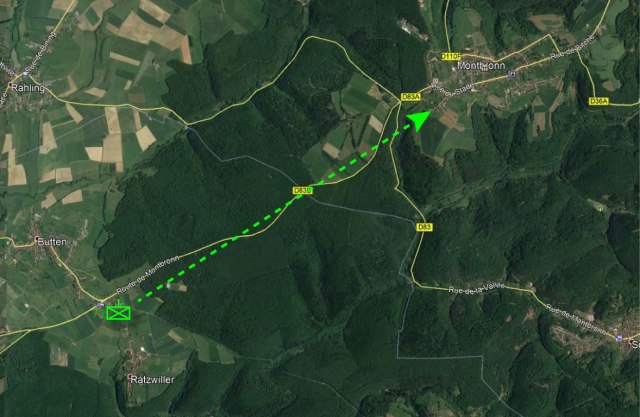
Dec-8-44
Click to enlarge

December 9

This day brought more rain, snow, and mud to the Low Vosges. The 71st departed Butten in trucks and moved into the town of Montbronn, garrisoning it as a new assembly area for multiple units of the 44th Division. All units were in place and the Command Post was opened by the early evening. The next morning the Regiment would be taking it’s place along the new front lines.
December 1-3, 1944

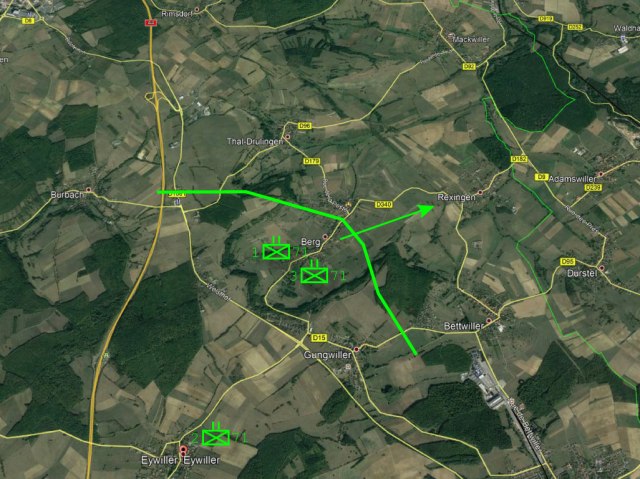
At the beginning of December the 71st Infantry had fought their way another five miles to the north-east of Rauwiller, pushing the Germans out of the towns of Hirschland, Baerendorf and Eschwiller and establishing a front just to the northeast of the town of Berg. Since their first combat outside Embermenil, they had fought through some 30 miles of farms, forests, and towns to their current positions, with First and Third Battalions occupying defensive positions in the town of Berg, and Second about two miles behind in the town of Eywiller.

Dec-1-44
Click to enlarge

December 1, 1944

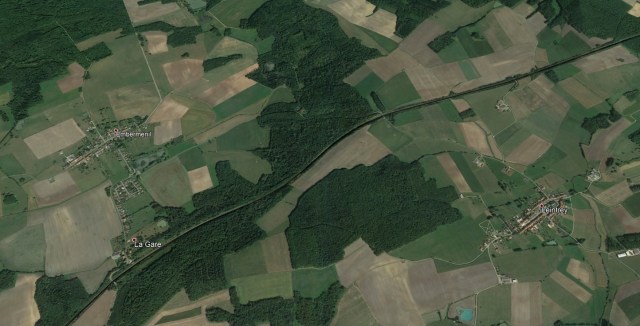
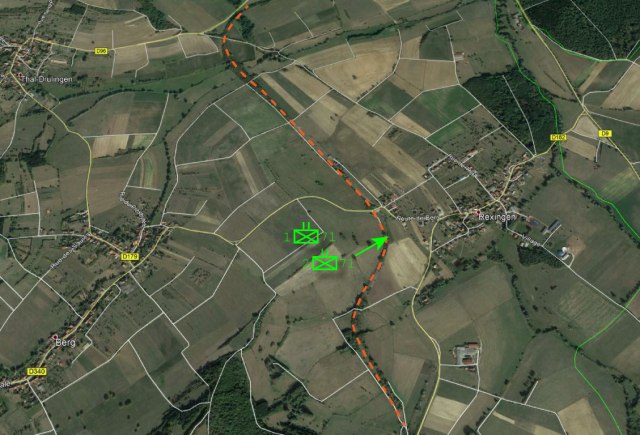
First Battalion pushed out of Berg and into the forested area to the north-east (part of that forest appears to still be intact, just to the north-west of Bettwiller). The Battalion encountered resistance in this “Bois de Todtenberg” (Todtenberg Wood), clearing it by late afternoon. Second Battalion pushed through their position, helping clear the area and setting up for an attack on Rexigen, to the northwest. As they pushed through what was at the time a forest, they encountered heavy resistance from small arms, mortar and artillery fire. Company F was able to push across the railroad tracks (abandoned today, but the corridor is still visible – dashed in orange in the image below) but the operation was halted due to the intense resistance. All companies fell back to defensive positions.

Dec-2-44
Click to enlarge

December 2, 1944

The regiment continued pushing east, beginning on the morning of the 2nd, taking the town of Rexingen and moving quickly by truck to prepare for an attack on Mackwiller, setting up defensive positions to the west of the town. Heavy resistance in the woods to the south made for tough fighting for Second Battalion but they were able to set up for the final push with Companies E and G on the high ground to the north-west and Company F set up in the woods to the south-east of town.

Dec-2-3-44
Click to enlarge

December 3, 1944

This morning dawned cold and cloudy with rain and poor visibility. Company F jumped off at 0715 and entered the town of Mackwiller by 0745. Companies E and G held the high ground to the north while F continued mopping up resistance. By early afternoon, the 71st had completely taken the objective and all three battalions were ordered to make reconnaissance of the new assembly area (in Mackwiller) at 1400. Mackwiller would be the jumping-off point for an attack on Diemeringen, a fairly significant city, to the northwest.

Dec 3-44
Click to enlarge

The Price of Freedom

This Memorial Day is an opportunity to pause and reflect on the great sacrifices made by so many brave men, women, and the families who support them. This blog will always be tied to Memorial Day and remembering the actions of the 71st Infantry Regiment, recognizing that all the men of the 71st were part of a long line of patriots stretching into the past and reaching forward to today. “Thank you for your service” does not express the gratitude I feel deeply enough but I offer it to all our veterans.

From the “Awards” report for the 71st IR I’d like to introduce you to Staff Sergeant Stanley F. Scibek, one of my grandfather’s comrades-in-arms who never came home from France.

Staff Sergeant STANLEY F. SCIBEK, Company I, 71st Infantry, Silver Star (Posthumous), for gallantry in action against the enemy on 13 November 1944. Sergeant Scibek was leading his platoon into the town of Leintrey, France, through a barrage of mortar and artillery fire when machine-gun fire from a concrete pillbox impeded the advance of his scouts. Creeping and crawling warily to the flank of the pillbox, Sergeant Scibek rolled two hand grenades into it, killing its two occupants and putting it out of action. As a result of this courageous deed, the capture of Leintrey was greatly facilitated. As the platoon advanced upon Hill 310, its next objective, his scouts were again stopped by the enemy. Sergeant Scibek crawled forward and tossed another grenade which killed two more Germans and paved the way for his platoon to reach its objective. During this action, Sergeant Scibek was killed by enemy machine-gun and mortar fire. Sergeant Scibek’s courage, aggressiveness and fighting spirit exemplify the finest traditions of our Armed Forces.

Decoration Day
Sleep, comrades, sleep and rest
On this Field of the Grounded Arms,
Where foes no more molest,
Nor sentry’s shot alarms!
Ye have slept on the ground before,
And started to your feet
At the cannon’s sudden roar,
Or the drum’s redoubling beat.
But in this camp of Death
No sound your slumber breaks;
Here is no fevered breath,
No wound that bleeds and aches.
All is repose and peace,
Untrampled lies the sod;
The shouts of battle cease,
It is the Truce of God!
Rest, comrades, rest and sleep!
The thoughts of men shall be
As sentinels to keep
Your rest from danger free.
Your silent tents of green
We deck with fragrant flowers
Yours has the suffering been,
The memory shall be ours.
                              — Henry Wadsworth Longfellow

Retaking Rauwiller

November 26th

USA-E-Riviera-27

After stopping the advance of the Panzer Lehr Division, the 71st fell back from the front lines, returning to their former positions around Goerlingen and Kirrberg. The Regiment was recuperating and re-organizing after the intense fighting.

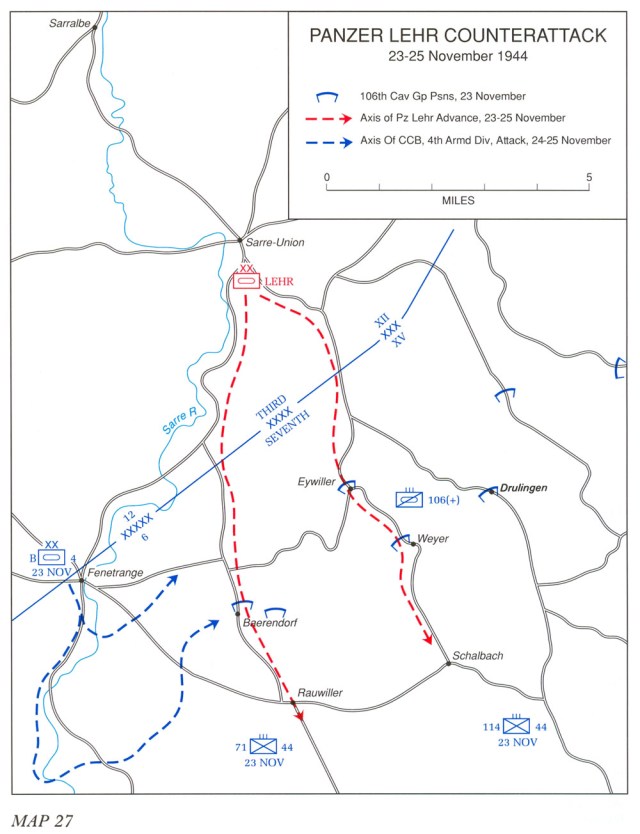
To the north, the 45th Division, which had passed through the 71st’s lines, and the 114th Regiment were pushing back against the Panzer Lehr and the 361st Volksgrenadiers. Increasing the pressure on Panzer Lehr, the 4th Armored Division, which had originally intended to cross the Saare River north of Fenetrange, had found the ground too soft and re-directed, moving south and then east from Fenetrange. This movement gave the American armor flanking positions to counter the German heavy armor.

As these friendly units begin to link up and the 71st Canon company continues pounding the Germans, they begin to fall back toward Sarre-Union. As they do, the 71st follows, occupying the towns they were ferociously defending two days prior.

November 27th

As the allied troops and armor begin pushing the Germans in a counter-attack of their own, they begin firing incendiary shells into the towns. This had the desired effect of rooting German infantry out of their sheltered positions; it likewise made Major Buschkamper’s hiding place in the attic no longer viable. Faced with staying put or burning to death, he made a dash through the flames and outside. Crawling for the next two hours in the shadows, he was able to evade the German occupiers and re-join the 71st in the pre-dawn hours of the 27th.

In preparation for a Divisional attack, third battalion began moving east from Rauwiller toward Kirrberg. The remainder of the Regiment continued re-consolidating, re-supplying and preparing to move forward. Throughout the 26th and 27th, the cold rain continued to fall throughout the region.

November 28th

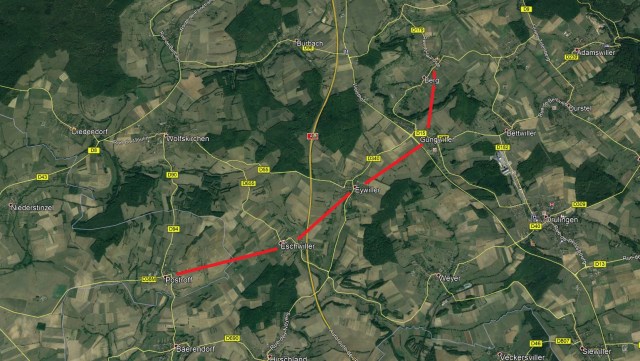
The morning of the 28th found the Regiment moving north, following the advances of the 45 Division. Company G left their defensive position south of Rauwiller and marched through Baerendorf, Postroff, Exchwiller and Wolsthof. Company H joined up with 4th Armored Division and pushed through Eywiller, digging in north of town by day’s end.

November 29th

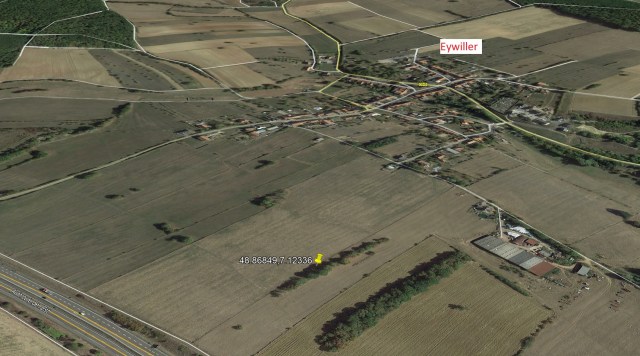
Canon company moved up to a new position just southwest of the town of Eywiller on high ground.

19441129CanonCompany

The 71st was now occupying a defensive line from Eywiller to Postroff. The anti-tank company moved into Postroff where they reported “many dead Germans in and around town”.

Company E reporting more men evacuated due to exposure and trench foot. Other companies reported the enemy shelling “the valley to our front [north]”.

November 30th

On the 30th several companies moved up, taking positions in Hirshberg and Gungwiller. The Regiment had filled in a defensive front running roughly north west from the town of Postroff to Berg.

19441130DefensiveLines

As the first full month of combat came to a close the reports do a bit of ‘wrapping up’. Of note were the following:

HQ Company received the “Combat Infantry Streamer” and the members of Company I received the Combat Infantryman Badge. On a more somber note, the Regiment reported the following statistics:

1288 enlisted men and 43 officers were reported as casualties. Of these, 485 were killed in action. 406 men were removed from combat due to trench foot – a direct result of the conditions they were fighting in. 94 men were listed as suffering from “combat exhaustion”, what we know today as PTSD.

As December came to the foothills, the 71st was about to take part in something that had never been done before; a military assault over the Vosges mountains in winter. Ahead of them lay the German border and the Maginot Line – with it’s defenses manned by Germans defending their soil and taking aim at the allied advance.

Stopping the Panzer Lehr

Nov 22

On November 22nd, the regiment was on the move from Sarrebourg to the North and East, heading about 7-8 miles to the area around Goerlingen. This maneuver was coordinated to thrust northward through the Saverne Gap, rolling through the Saar Valley and capturing the crossroads town of Sarre-Union. All the companies reported no contact with the enemy as they moved by truck to the new area. The 71st was supporting the advanced elements of the 106th Cavalry as they leap-frogged from town to town, filling in the allied front moving through the Saar River valley.

Nov 23 – Thanksgiving

Though they were on the move, several companies had reasons to be thankful. Company D reported that the men were issued clean clothing and additional rations. Company M had “hot meals for the first time in ten days”. However, it wasn’t all rosy as First Battalion’s Anti-Tank platoon moved west and reported enemy mechanized resistance likely on the other side of the ridge to the west of Goerlingen (photo below). As the 71st was about to find out, they were making contact with the screening force for a German counter-attack designed to dislodge them from their newly-won positions.

Goerlingen

Company F also didn’t get much of a Thanksgiving day, as they were actively defending the towns of Kirrberg, Postroff, and Barendorf about 2 to 3 miles to the north of Goerlingen, likely skirmishing with the 361st Volksgrenadiers.

November 23 (overnight) – November 24

1200px-SS_Pz_Lehr_divisional_insignia.svg
Panzer Lehr Insignia

While the 71st was enjoying a bit of a lull, they were unknowingly in the crosshairs of the once-elite Panzer Lehr Division. This storied division, originally the ‘teaching’ armored division of the Wehrmacht, had been “bled white” during the Normandy campaign and had been sent back to the Munster training ground for refit and resupply. The Panzer Lehr division was moved 300 miles south and ordered, along with the 361st Volksgrenadiers (the main force opposing the 71st and the advanced elements of the 106th Cavalry) to push into the 71st Regiment and re-capture Sarrebourg as it had now become a central supply and logistics point for the advancing Allied forces. The Germans believed that a swift strike by the Panzer Lehr Division and it’s 60+ tanks with experienced crews, could cut off the Allies, re-take Sarrebourg, reunite the two German armies being split by the 44th Division / 7th Army and shore up the southern front as winter began in earnest.

While the 71st enjoyed a bit of quiet, the advancing German armor had arrived in Sarre-Union, split into two columns, and started pushing south. By the evening of the 23rd Panzer Lehr was plowing through the advanced elements of the 106th. The 71st had begun moving by trucks to the area in and around Kirrberg and the outskirts of Rauwiller and as dawn broke, the Germans began shelling the area with all First Battalion companies reporting heavy fire.

In the early hours of the 24th the acting commander of the third Battalion, Major Buschkamper, looked out the windows of his command post in Rauwiller to see several German tanks and about 70 infantrymen strolling down the street. As combat erupted, the tanks began firing point blank into the ground level of the Major’s house and he quickly found himself cut off from his men and surrounded by the advancing Germans (see footnote).

Company G had been on the way to Kirrberg when they were stopped and ordered to attack Rauwiller with Companies E and F on their left flank. They started the attack on the afternoon of the 24thbut were met by heavy resistance, no doubt due to the Germans having already overrun the town.

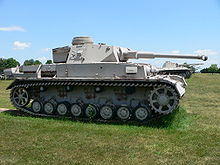
220px-Panzer_IV_1
PzKpfw IV

They quickly withdrew and took shelter in and around “four buildings on the right edge of town” where they continued to have “several engagements with enemy patrols”.

Company I also moved from their defensive position in Goerlingen to support the attack to stall the Panzer Division’s push into Rauwiller. They also ran into enemy resistance and were “pinned down by enemy fire all day.” All the companies in and around Rauwiller dug in for the night, maintaining security until the next morning.


USA-E-Riviera-27

November 25

As dawn broke on the 25th it appeared that the western column of Panzer Lehr’s advance to Sarrebourg was being held up by the 71st; it was by no means over. The tanks in Rauwiller began, in the words of Company E, “riding back and forth, firing point-blank at houses occupied by our men.” Although they tried fighting back and Company F “got several direct hits on [the] tank [it] did not seem to damage it in the least.” Company E managed to extricate themselves when a Battalion from 45th Division relieved them that evening.

Company G also withdrew from Rauwiller in the afternoon, making for the woods to the south. As they were digging in the 45th Division passed through their lines to attack the town. The Germans began firing into the woods, no doubt to slow the advance of the 45th but also dislodge the 71st. All of the Second Battalion retreated back to Goerlingen for rest and re-organization.

Footnote: It is interesting to note that the “Official History of the 71st Infantry Regiment” makes mention of “Tiger” tanks in the town of Rauwiller “firing their 88’s” into the buildings. After cross-checking several sources this author is quite certain that any Tigers (Panzerkampfwagen VI Tiger Ausf. E) Panzer Lehr may have had were either in repair back in Munster or (more likely) knocked out during the Normandy campaign. The western column (which opposed the 71st at Rauwiller) was primarily Pz IV’s with possibly a few Pz V “Panthers” mixed in. All the corroborating accounts of Panzer Lehr’s push toward Sarrebourg are quite specific that they had +/- 34 Pz IV’s and +/- 38 Panthers and not all of these units may have actually been involved. This isn’t to diminish the shock of seeing German armor of any kind waltzing into town but does point out the inadvertent embellishment that can work it’s way into re-telling of the accounts of engagements.

We will pick up Major Buschkamper’s story as the 71st supports the efforts to turn back the German armor and re-take Rauwiller and the towns north.

Pressing Through the Foothills

I’m really glad I can post this entry on the day after Veteran’s Day. To all those who served or are currently serving, thank you!!

November 19, 1944

With the Regiment now in position on the surrounding high ground, Canon Company announced their intentions with a pre-dawn artillery barrage into Foulcrey at 02:30. Firing from the elevated position below, the fire was undoubtedly effective.

Hill 355

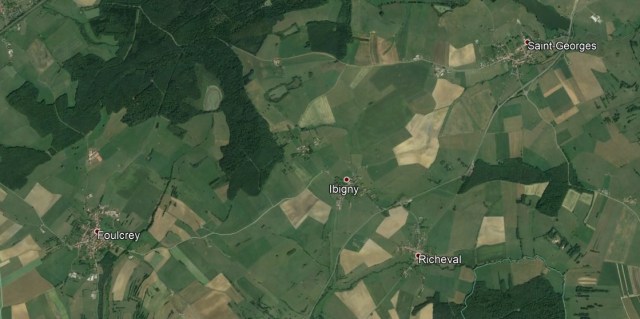
Second and third Batallions started their attack at dawn on Foulcrey and the nearby town of St. George. Company K and M moved up by truck and supported the taking of St. George.

Company M took St. George and moved forward to within 1/2-mile of the town of Lorquin. This map shows the context of these towns and villages in the foothills around Foulcrey.

11.19.1944_towns

Reports from companies are changing from being in ‘dug in’ positions to moving by truck to take towns. The reports also mention prisoners being taken in significant numbers and light to no enemy resistance as they advance.

November 20

As perfect example, the introductory report from the HQ company states they “left Leintrey at 0730 and moved by motor 15 miles to St. George. All the companies report they are continuing their rapid advance.

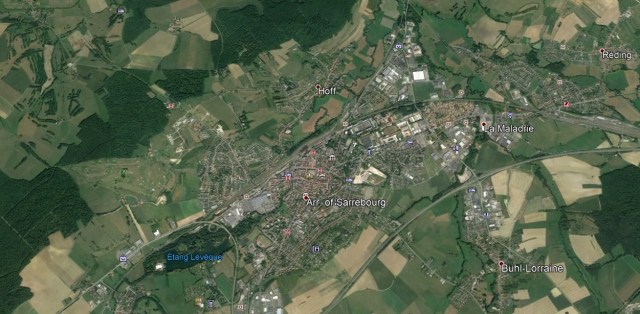
By the end of the day, Company B had moved into Sarrebourg, a primary Divisional objective. In their report they note that the enemy resistance is ‘not very effective’ and prisoners were being taken in very large numbers.

11.19.1944_Sarrebourg advance

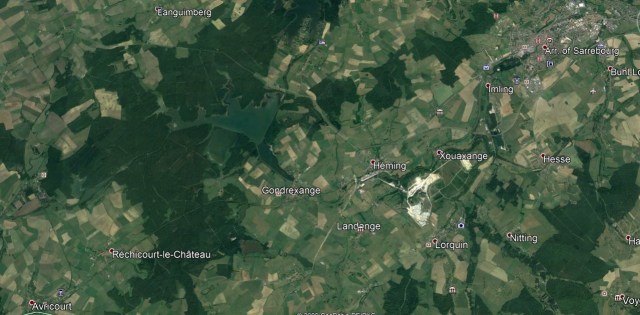
Third Battalion (Companies I, K, L, and M) moved through Landage and Imling, reaching Sarrebourg, where they stopped for the night.

November 21

For the first time since arriving, the 71st found themselves in a somewhat major city. While the Canon company remained dug in about two miles south-west of Sarrebourg, the other companies moved into the city proper. Reports for the day mention ‘mopping up’ the city and conducting house-to-house searches for enemy hold-outs. The reports also mention the various companies setting up CP’s in schoolhouses and bunking the men in houses. Company G set up in a former hospital and had the kitchen join the company and serve hot meals.

Sarrebourg Overhead

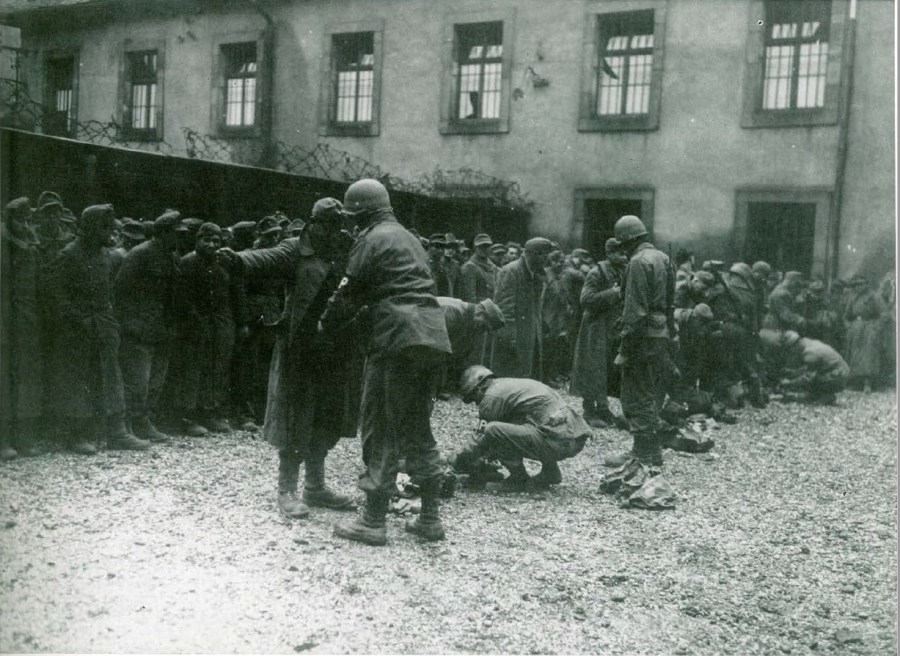
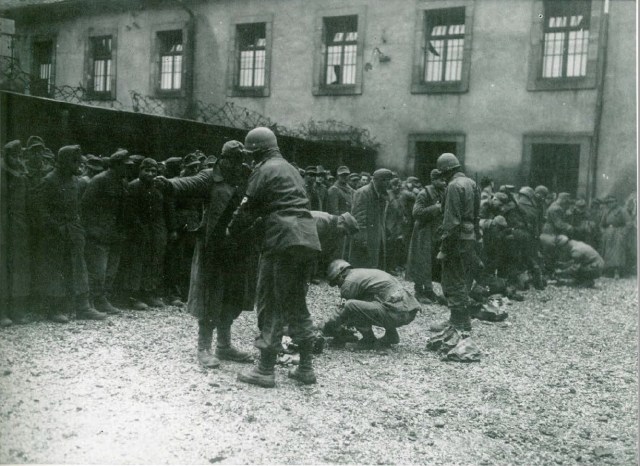
One interesting footnote to the liberation of Sarrebourg is the photograph below, taken from the official history of the 71st Infantry Regiment. It corroborates the notations in the Operations Report of large numbers of German prisoners being taken as MP’s from the 71st are inspecting them, presumably on or around the 21st.

Sarrebourg, FR

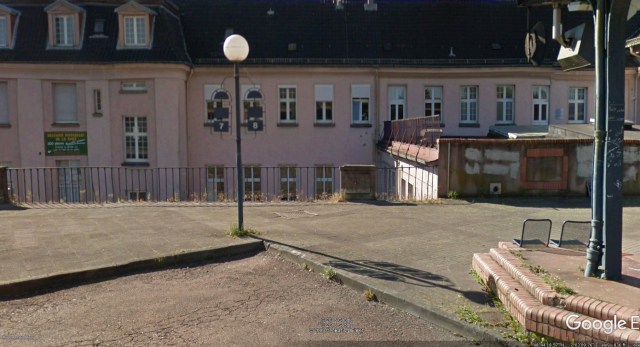
Again, through the magic of Google Earth, I have been ‘driving’ around the modern city of Sarrebourg trying to match up the building in the background. I am becoming moderately convinced, based on the size of the building, the proportions of the building face and the size and proportion of the windows, that this photograph may have been taken on the “track” side of the train station. The closest view I can get is this:

trainstation_Sarrebourg

I can tell there’s been some renovations done to the building and the Google street image is taken from an upper level where buses now unload. There’s some noticeable fore-shortening of the image as well which I attribute to the dome camera on top of the Google van. All that aside, if the 1944 photo was taken from down below in the lower courtyard area I can see the context working out. I’ve sent the original photograph to an email address for the Sarrebourg Regional Museum and, if Google Translate did it’s job, hopefully I’ll get either confirmation or some additional explanation of where the photo was taken.

Into the Vosges Foothills

After breaking through the German defenses in the Foret de Paroy and taking the stronghold they had established in Leintrey, the 71st began to transition from a slow crawl to a rapid advance. The terrain began to change along with the fighting as the rolling hills in and around Embermenil, Leintrey, and Laneuveville started to give way to the foothills of the Vosges mountains. Taking strategic terrain becomes important as the front moves east and the Allies begin fighting uphill in every sense of the word. As the 71st advances, the overrun Germans began to surrender in notable numbers for the first time.

November 17th

Second Battalion started the 17th attacking and advancing to the east through the broken woods and fields.

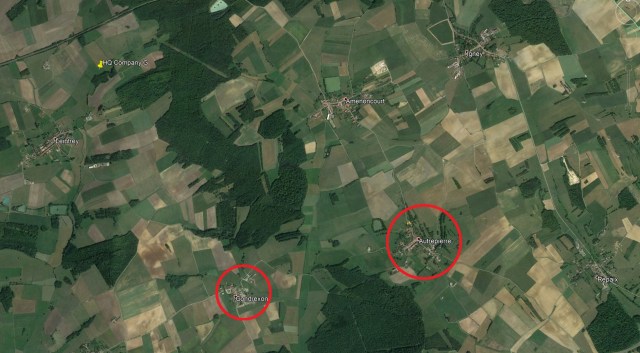
Company E was trucked from their former positions in and around Embermenil to Leintrey. They then advanced east by foot in the afternoon another two miles, moving through the towns of Amentcourt and Autre Pierre. Two miles outside Autre Pierre they were fired upon by a machine guns, one of which was firing down the road. They moved back into Autre Pierre for the night.

Company G was on their way from the front back to Embermenil for Regimental Reserve when their orders were changed. They found themselves trucked to Gondrexon where they took the town, finding it occupied by only a few civilians. Advancing to the east they came under fire just like Company E and returned to Autre Pierre for the night.

11.17.1944 Company G

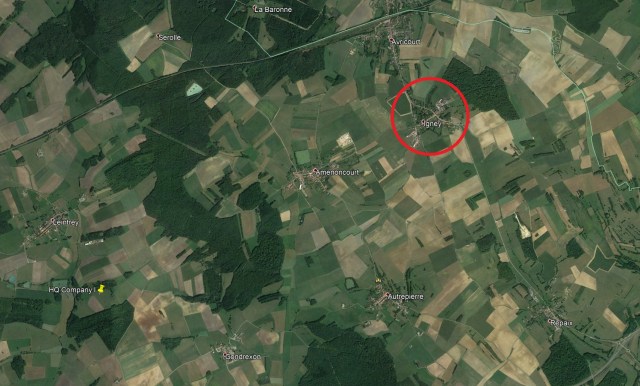
Third Battalion was once again the forward elements of the 71st. Company I began the day in reserve in the vicinity of Leintrey. Like the rest of the Regiment, they began an attack on the afternoon of the 17th. Unlike the rest of the Regiment, they moved north-east toward the town of Igney where they encountered stiff resistance. Pressing in, they secured the town after four hours of fighting and 18 confirmed enemy killed.

11.17.1944 Company I

On the heels of Company I, Company M also pressed the attack, capturing the town of Amenoncourt. The company report mentioned good tank and aircraft support as they pressed east.

November 18th

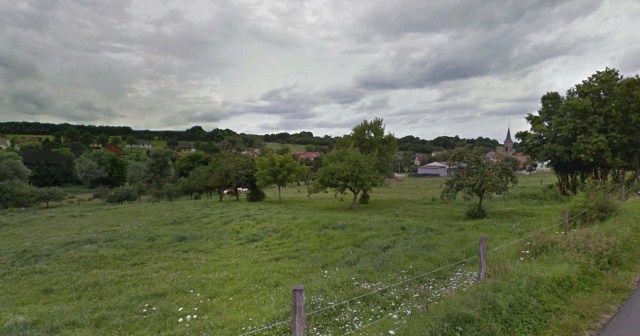
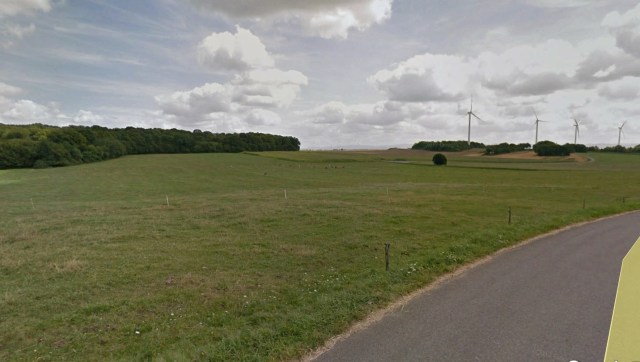
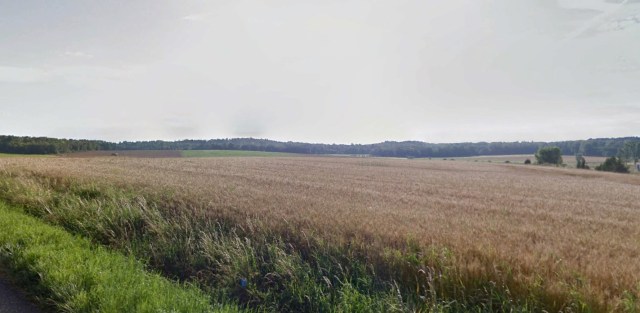
The next objective was the larger town of Foulcrey to the east but after advancing between four and five miles over the preceding two days, the 71st needed to consolidate positions and supply lines. To that end, the Regimental HQ relocated from Leintrey to Igney. Likewise the Canon company relocated for the first time to just outside Igney. The photograph below is looking east from Igney toward Folcrey and, evidenced by the modern wind turbines, the ground is continuing to rise as the 71st continues to advance.

Igney Countryside

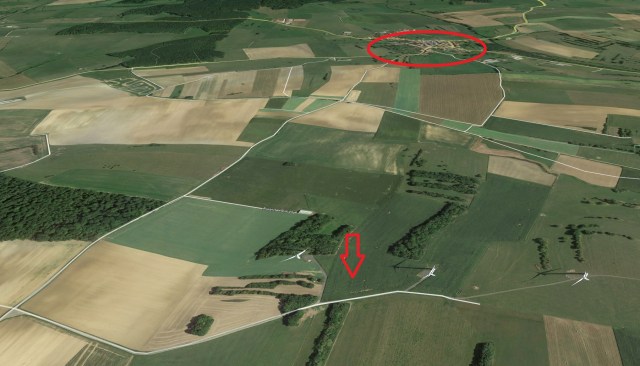
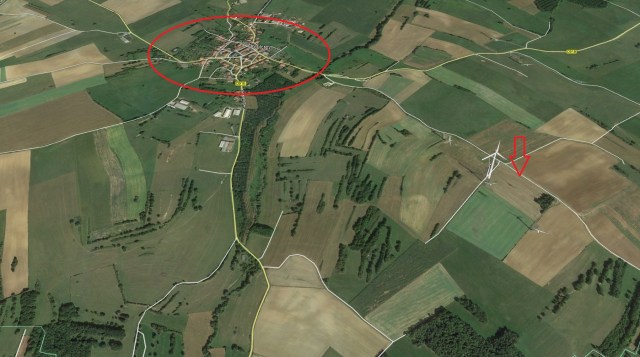
As the Canon company moved into position, they were able to assist the offensive actions of Third Battalion. Company K moved out of Igney and attacked Hill 355, located to the south-west of Foulcrey. In the photo below you can make out the same wind turbines from the photo above and, thanks to Google Earth magic, you can see the strategic importance of this position as it has a commanding view of Foulcrey (circled in red).

Hill 355.jpg

Companies L and M moved even farther to the east, bypassing the objective and taking high ground to the southeast of Foulcrey. Again, modern improvements make the location easily identifiable as wind turbines sit where the 71st dug in some 74 years ago.

11.18.1944 Companies L and M.jpg

With the Canon company set up outside Igney and Third Battalion holding high ground around Foulcrey, the stage was set for a full Regimental assault on Foulcrey and continued advances to the east.


Battle for Leintery

In the pre-dawn hours of November 13, the Regiment, along with the entire 44th Division, began offensive operations. The first objective for the 71st was to liberate the town of Leintery, the first major French town on the opposite (east) side of the Foret de Parroy. This would require the Regiment to leave their current dug-in positions within the forest and advance over open ground to what remained of Leintery’s farmhouses and buildings after weeks of artillery bombardment.

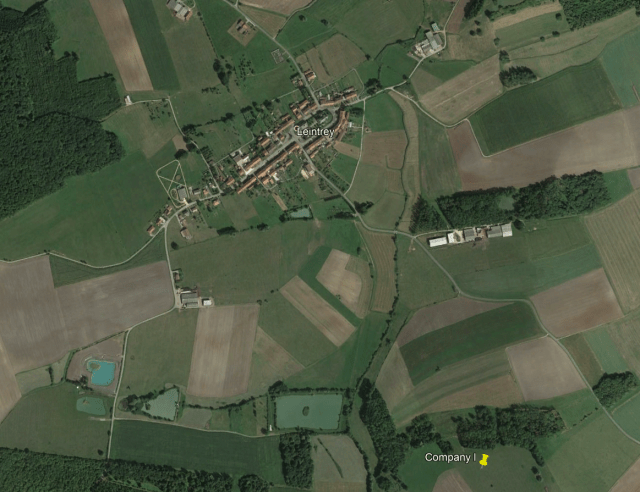
All companies, including those formerly in Regimental reserve, began the attack on the 13th with the Canon Company providing artillery support with special emphasis on company “I”.

11.13.44_Company I

From the position above, Company I was able to move “back” to the north-west and take the town of Leintery. This took it’s toll as the Company report states that their commanding officer and “several” enlisted men (90 according to another source) were wounded during the assault.

The other Companies experienced varying degrees of success with several being pinned down by heavy German machine gun fire. Of note, Company “G” had several Germans surrender and come through their lines, a pattern which would repeat in the months to come.

November 14

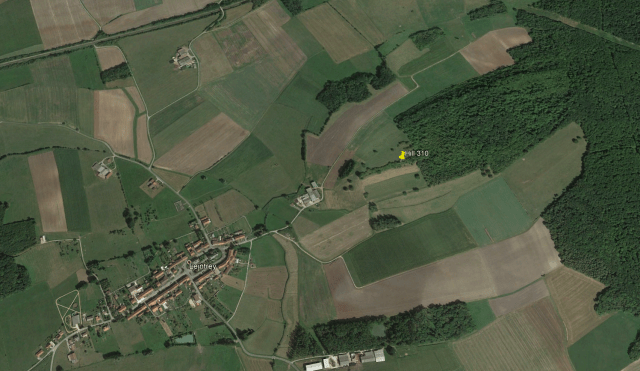
The next morning found the 71st continuing the attack. This day, however, found them starting from different positions. Company “I”, after taking Leintery, moved to take high ground to the north and east identified as “Hill 310” where they were forced to wait for flaking support from other companies.

11.14.44_Hill 310


Company “K” had followed them through Leintery and were now advancing to shore up Company I’s position. As the fighting continued, Second Battalion’s HQ company “sent all available men to [be] litter bearers” for the wounded.

November 15th

As the next day dawned, the First and Second Battalions were largely in supporting roles as Third battalion continued to press the advance. By taking the high ground to the east of Leintrey, elements of the 71st had encircled the most fortified German positions. This also meant they were receiving fire from all sides. Company K, following Company I north and east into Leintrey, were now holding defensive positions in and around the village. They were also the link between Company I and re-supply and medical evacuation routes.

Key to the advance and the ability to hold the line at this point was the work of the Canon and Anti-Tank companies. From the top of hill 310, Company I was able to direct artillery fire on the hardened German positions. The engineers of the Anti-Tank company were tasked with locating and disarming the extensive minefields the Germans had established long before the 71st arrived. These demolition operations were often carried out under withering machine gun, mortar and small arms fire from the defending German lines.

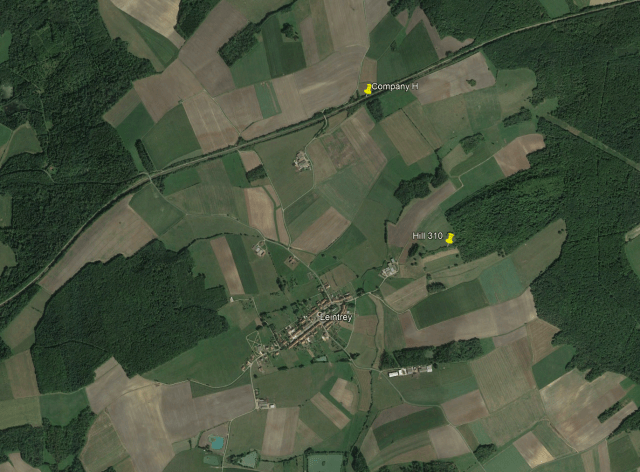
All of the Division’s companies along the front had continued to press the defending Germans back through the woods and consolidate their positions to form the new front about a mile to the east of Leintry. Company H, for example, had been able to move along the railroad tracks to the north of Leintrey and were now in a supporting position for Company I.

11.16.44 Company H

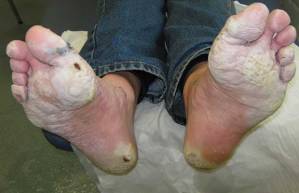
On November 16th, the 71st HQ company moved from Embermenil to Leintrey, signalling that the ‘front’ was firmly established to the east of Leintrey. The next few days will see the Regiment and the entire 44th Division push east again. The winter weather in the Vosges foothills had started to set in and many of the 71st began to suffer from trench foot, an “immersion foot syndrome” caused by poor footwear, wet feet, bad hygiene and cold temperatures. TrenchFootThe men afflicted by this condition had to be pulled off the line, warmed up, cleaned up and treated until the skin had healed. In extreme cases, the dead skin would need to be surgically removed. By all accounts, it was a painful condition as the circulation and feeling returned to the affected areas.
 

Initial Advances – Nov 1st – 12th, 1944

As November begins the reporting from all the companies takes on a much more detailed tone. I suspect that once the regiment took up the former defensive positions of the 79th, they were able to settle into a routine and each company’s secretary found his rhythm for reporting. It is interesting that, even in this context, some companies had much more ‘verbose’ entries compared to others. As the rain continued to saturate the 71st, it also ‘seeps’ through the reporting when companies casually mention they have been “on the line for 11 days” or “the men still haven’t had a hot meal.”

It’s also useful to note that the 71st Regiment was composed of three Battalions. Each Battalion had four rifle companies and one “headquarters” company. Companies A-D were 1st Battalion, companies E-H were 2nd Battalion and I-M were 3rd Battalion. There was no “J” Company. The Regiment’s Headquarters Company, Cannon (artillery) Company, Anti-tank Company and Medical Detachment operated independently and in support of the combat Battalions.

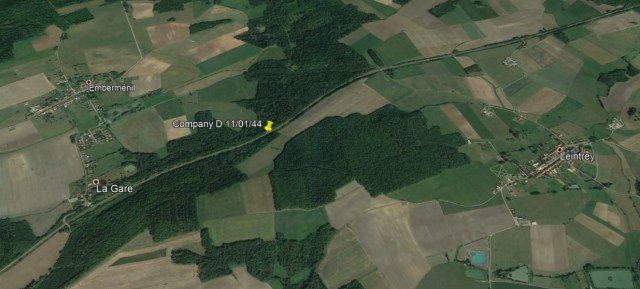
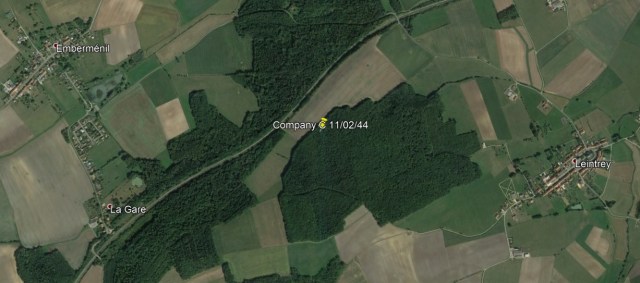
On November 1st, the First Battalion companies were occupying positions in and around the west side of the Foret de Parroy.

Nov 1 Company D

The position of Company D is shown above and is notable because their report from Nov 1st describes the Germans using a loudspeaker to to address them with “Welcome 44th. War is hell. Come over to our lines and get a hot meal. Ask the 79th Division; they can tell you about it”. According to Company A and the official Regimental History, the reply to the offer was a barrage of artillery and mortar fire.

Nov 2nd

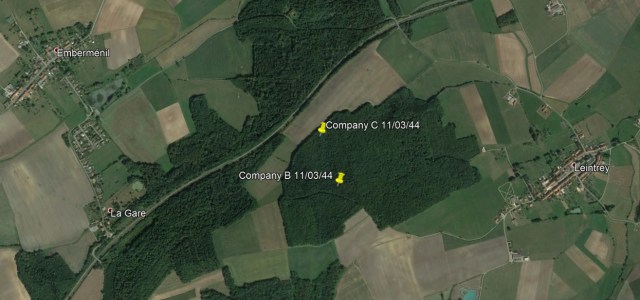
Bravo company reported that they were within 75 yards of enemy positions. They also reported another broadcast from the Germans, similar to the one on the preceding day, but accompanied with music. Charlie Company (position shown below) confirmed the loudspeaker broadcast.

CompanyB_110244For the first time in the reports we have a direct enemy attack on the 71st. The HQ Company of 2nd Battalion reported a tank attack with heavy artillery fire. The attack was broken up by friendly artillery.
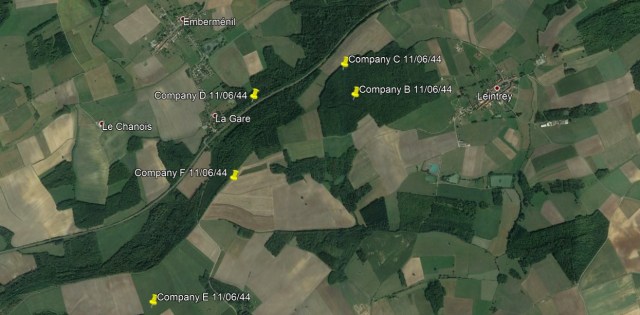
Easy Company bore the brunt of a sustained (90 minute) enemy artillery and mortar barrage. Two of the company medics went to the aid of wounded Tank Destroyer crewmen. Company E also sent out a combat patrol that engaged the enemy near a forward German observation post.

Elements of 1st Battalion (Companies A through D) started moving into position for attack during the early morning of Nov 3rd.

Nov 3rd

Reading between the lines of the reports, both the 71st and the opposing German forces were hindered by weather. Companies reported very few aircraft, and stated it was hard to use binoculars. There were some successes in spite of the conditions as the Cannon Company fired a 100-round barrage on the town of Reillon where the “enemy had vehicles parked bumper-to-bumper” and the barrage was “very effective”.

The entire 1st Battalion began advancing on enemy positions overnight and into the early hours of the 3rd, marking the Regiment’s first offensive operations. The primary objective was advancing over the open ground between Embermenil and the Foret de Parroy.

Company A began by sending out a reconnaissance patrol at 20:00 on the evening of the 2nd and by 08:00 the next morning the company’s 1st and 2nd platoons had moved into former enemy positions.

Company B also began advancing on the evening of the 2nd. They reported an enemy counter-attack but held their positions. Companies C and D also moved forward on the morning of the 3rd and gained ground, digging in to former German positions. Company D made preparations for an expected enemy counter-attack.

Nov3_1st battalion.jpg

The 2nd Battalion also moved up. Company E sent a combat patrol out at 03:00 on the morning of the 3rd. Encountering no resistance, the Company was able to advance nearly 2000 yards. Their forward observation post noted a large column of troops, tanks and artillery headed toward Leintrey. They took enemy mortar fire in their new positions but dug in. Company F also advanced 1000 yards east, taking enemy small arms fire.

Nov 4th

Both 1st and 2nd Battalions spent the day consolidating positions taken during the previous day’s advance and enduring enemy artillery barrages that were heavy at times. Company E mentioned that they heard enemy tank movement overnight. German snipers were very active in the forest and Company B reported they were doing “everything possible to clear them out.”

Nov 5th

The new positions in the woods necessitated some new logistics and First Battalion’s A and P (Ammunition and Pioneer) platoon was busy blazing new supply and medical evacuation routes through the woods.

Company A sent out a night patrol and  located the enemy motor park, a forward observation post, and troop assembly area. The weather cleared for a bit as Company B was strafed by enemy aircraft and they observed air combat taking place above them. Company E seemed to have the worst of it on this day as they were subjected to a 20-round mortar barrage which hit their machine gun section. Company G’s MG section was sent to the front line to relieve them.

Nov 6th

All the Regiment’s units reported a fairly quiet day with little enemy artillery. Men used the time to fortify their positions and tend to equipment. Positions of the various companies noted below:

Nov6_positions

Nov 7th

The cold rain returned and the reports note that foxholes were flooding and caving in. General Dean and Lt. Col. Bedle visited Company B’s command post. Other sources indicate this was to reassure the men and let them know they were about to attack Leintrey.  Second Battalion companies were relieved by Third Battalion. Reports indicate rain was a downpour and vehicles were bogged down meaning some companies were forced to march to the front lines.

Nov 8th

The rain continued, although several companies mentioned enemy planes strafing their positions. There were conflicting reports over one or two planes being shot down. There was no mention of the specific type of aircraft. As with previous reports, the rain continued to cause foxholes to cave in and made vehicular movement difficult.  Enemy artillery was heavy in several areas of the lines and Company D was forced to abandon a mortar OP (observation post) due to an effective barrage.

Nov 9th and 10th

The rain continued to fall on the men and Company C reported their men had been in wet clothes and without sleep for 48 hours. There were reports of light to moderate artillery and mortar fire from the enemy. The 71st counter-batteries were heavy and effective with one report stating it was a “10 to 1” exchange. Both the 71st and the opposing German forces were in largely static positions.

Nov 11

The 71st spent the 11th making preparations to push east on the Germans. Company B sent a patrol to investigate the town of Leintrey which they searched thoroughly. Several companies reported enemy planes over their position and strafing.

Nov 12th

All the companies reported a devastating artillery bombardment of enemy positions that started around 19:00. One company reported they unloaded “about everything in the books”. There was little retaliation from the enemy. Company D had a rather ominous report noting they were “making preparations for the coming attack”. Company K’s XO and Communication Sergeant went on reconnaissance to forward assembly in preparation for the next day’s attack and the rest of the company started moving up by platoons.

The next day, November 13th, the 71st would participate in a Divisional attack to begin the march east toward Germany.

To the Front – October 1944

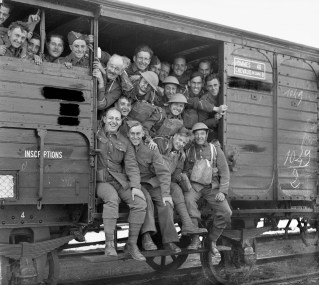
40and8On October 10th, Dan and the men of the 71st were introduced to European travel by way of the “40 and 8” box car. This narrow-gauge boxcar was “given” its name based on the stenciled capacity on the side: “40 Hommes/8 Chevaux” or “40 men/8 horses”. The men were crammed into these boxcars like these British soldiers (note the stencil to the left and above the door).
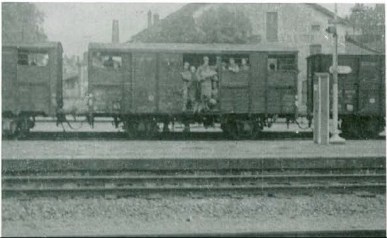
The train meandered its way through the newly-liberated French countryside, likely passing through the west and southern outskirts of Paris. The 44th Division kept moving along for the next eight days, finally arriving at the town of Marainviller on October 18th. The motorized convoy left Montebourg two days after the trains, arriving at the same time.

71st_40and8
The 71st in 40 and 8’s

At this point in the fall of ’44, the Allies had pushed the Germans back, liberating a large percentage of France in “the pursuit to the Western Wall“. General Alexander Patch, commander of the 7th Army, had landed at St. Tropez and St. Raphael on the Mediterranean coast of France and raced northward, meeting the Allied forces advancing south and east from Normandy.  His command was now the southern flank of the allied front. The fresh but untried 44th Division, was about to step in to the line to relieve Patch’s weary troops. The 79th Infantry had recently taken high ground near the French town of Emberménil and dug in to defensive positions. In the distance loomed the Vosges mountains and the defensive Maginot Line now turned to prevent the Allies from advancing into Germany. The 71st would be relieving the 79th.

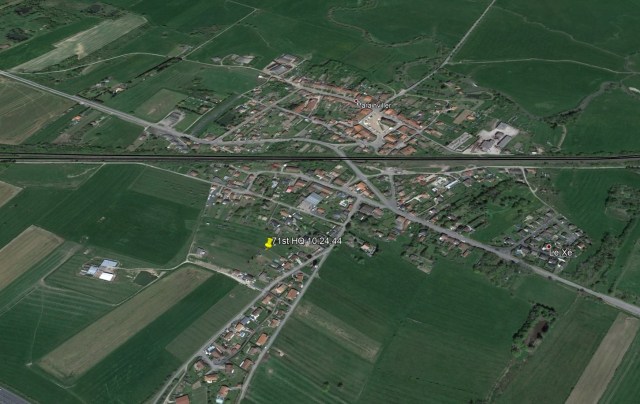
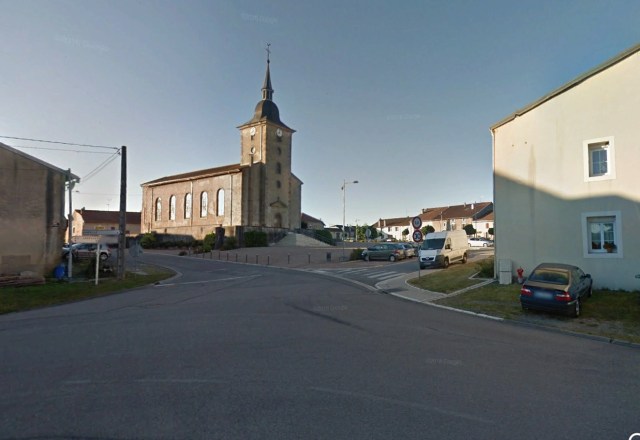
Once arriving near the front, the 71st established a temporary headquarters position just outside Marainviller.

10.24.44_HQ
Aerial View – Headquarters / unloading on October 24, 1944
Marainviller_church
Marainviller Church / Town Square
Marainviller_countryside
Marainviller Countryside

They relocated to the town of Laneuveville the next day, October 25th.

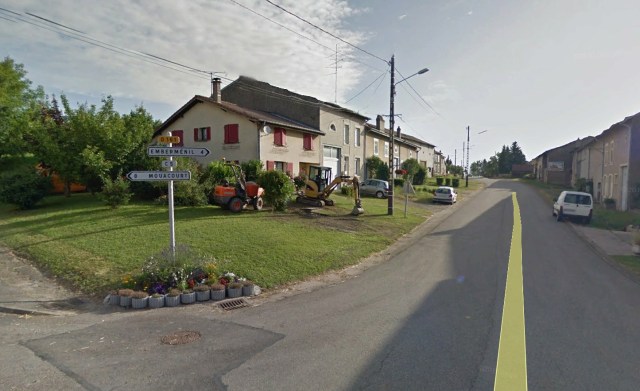
Laneuveville_1
Laneuveville – Note the sign for Embermenil
Laneuveville_2
74 years ago was this a field hospital?
Laneuveville_outskirts
Outskirts of Laneuveville looking toward Embermenil

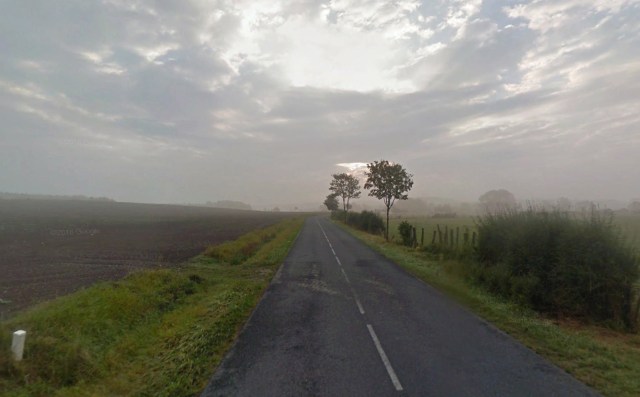
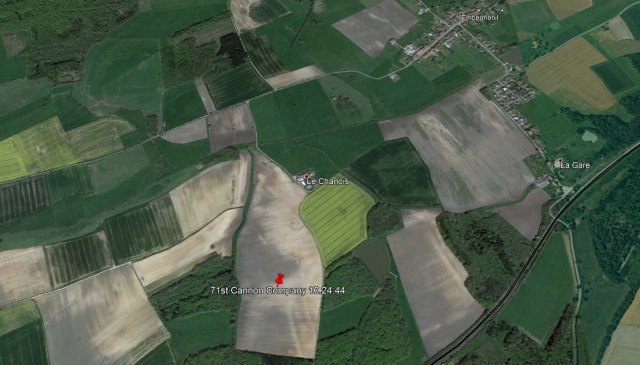
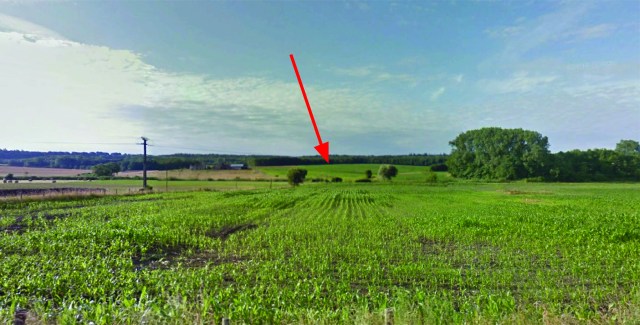
Artillery had set up on a high ridge to bombard enemy positions in and around the town of Lientrey and the surrounding wooded areas of the Foret de Paroy. In 2018 the area is a large open farm field. It’s reasonable to expect not much has changed as the S-3 reports for the Cannon Company begin to complain of “mud very bad in area” on October 28th.

Oct_cannon_company_aerial

Oct_cannon_company_arrow

The forward Division Command Post and the active duty Companies were in and around the village of Emberménil. The Germans were dug into the Foret de Parroy (Parroy Forest) about 3/4 of a mile in front of them. Rear elements, including artillery and mortars, were in the town of Lientery, about another 3/4 of a mile to the east.

Oct_forward_elements

Embermenil_outskirts
The Foret de Parroy from the outskirts of Emberménil
Embermenil_digging_in
71st Digging in at Emberménil

The last few days of October are recorded as “a long ordeal of foggy rain and soggy mud” in the Regimental history. Days were spent in water-filled foxholes with artillery barrages exchanged between both sides. Night patrols were sent to ascertain enemy positions in the forest and take targets of opportunity. One interesting story comes from the S-3 reports:

“Private Otis A. Garner, 22, Company “I”, 71st Infantry, an expert with the M1 rifle, has been conducting his own personal hunting expeditions against the Germans for so long that his platoon leader finally had to put a stop to it.

For example, one morning he found Garner on a little knoll far in front of his own lines. Garner motioned to a point a few hundred yards ahead where a solitary German could be seen industriously chopping down trees. The Missouri soldier waited until the German had neatly hewn the logs to foxhole size, then squeezed off a single shot. Result: one German less between us and victory, one high-grade foxhole cover trimmed with Teutonic thoroughness.

The platoon leader decided that it was all right this time, but from now on Garner would stay with his company. So he promoted the Missouri boy to Sergeant and now, come what may, Sergeant Garner must do his hunting with the company.”

Such were the opening lines of the story this brave division was about to write in the larger history of the war. A war to liberate a conquered continent, end a genocide unparalleled in scope, and preserve freedom in the face of evil.