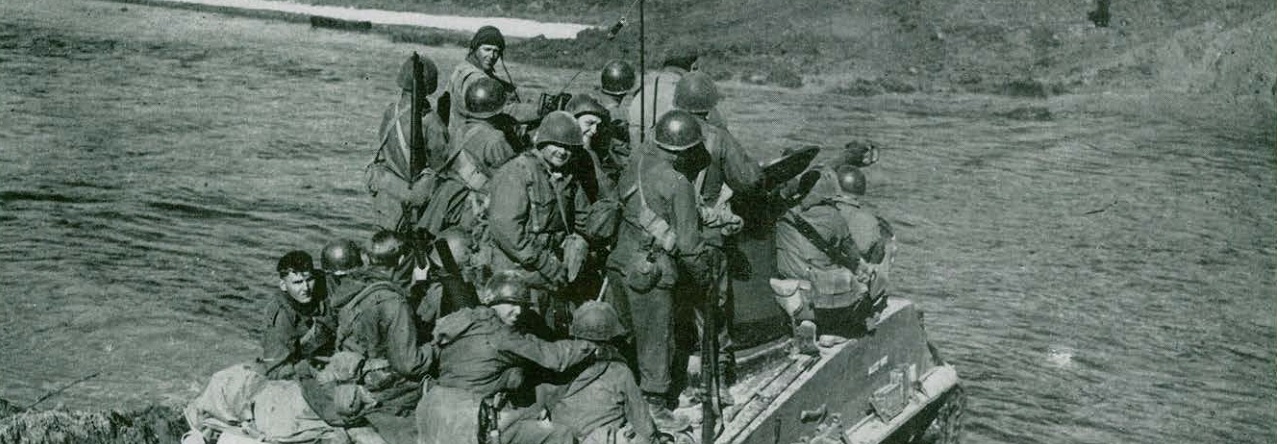
After breaking through the German defenses in the Foret de Paroy and taking the stronghold they had established in Leintrey, the 71st began to transition from a slow crawl to a rapid advance. The terrain began to change along with the fighting as the rolling hills in and around Embermenil, Leintrey, and Laneuveville started to give way to the foothills of the Vosges mountains. Taking strategic terrain becomes important as the front moves east and the Allies begin fighting uphill in every sense of the word. As the 71st advances, the overrun Germans began to surrender in notable numbers for the first time.
November 17th
Second Battalion started the 17th attacking and advancing to the east through the broken woods and fields.
Company E was trucked from their former positions in and around Embermenil to Leintrey. They then advanced east by foot in the afternoon another two miles, moving through the towns of Amentcourt and Autre Pierre. Two miles outside Autre Pierre they were fired upon by a machine guns, one of which was firing down the road. They moved back into Autre Pierre for the night.
Company G was on their way from the front back to Embermenil for Regimental Reserve when their orders were changed. They found themselves trucked to Gondrexon where they took the town, finding it occupied by only a few civilians. Advancing to the east they came under fire just like Company E and returned to Autre Pierre for the night.
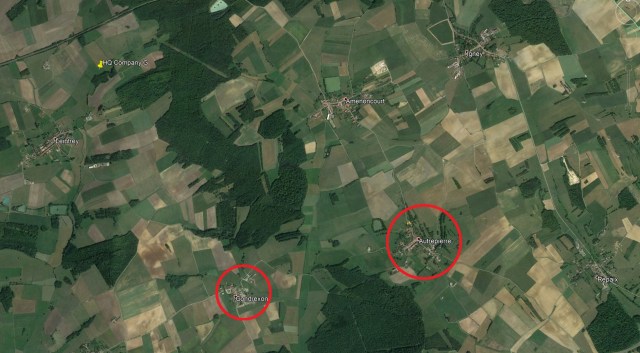
Third Battalion was once again the forward elements of the 71st. Company I began the day in reserve in the vicinity of Leintrey. Like the rest of the Regiment, they began an attack on the afternoon of the 17th. Unlike the rest of the Regiment, they moved north-east toward the town of Igney where they encountered stiff resistance. Pressing in, they secured the town after four hours of fighting and 18 confirmed enemy killed.
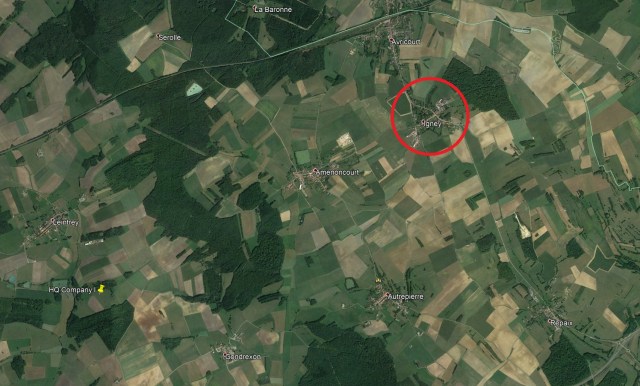
On the heels of Company I, Company M also pressed the attack, capturing the town of Amenoncourt. The company report mentioned good tank and aircraft support as they pressed east.
November 18th
The next objective was the larger town of Foulcrey to the east but after advancing between four and five miles over the preceding two days, the 71st needed to consolidate positions and supply lines. To that end, the Regimental HQ relocated from Leintrey to Igney. Likewise the Canon company relocated for the first time to just outside Igney. The photograph below is looking east from Igney toward Folcrey and, evidenced by the modern wind turbines, the ground is continuing to rise as the 71st continues to advance.
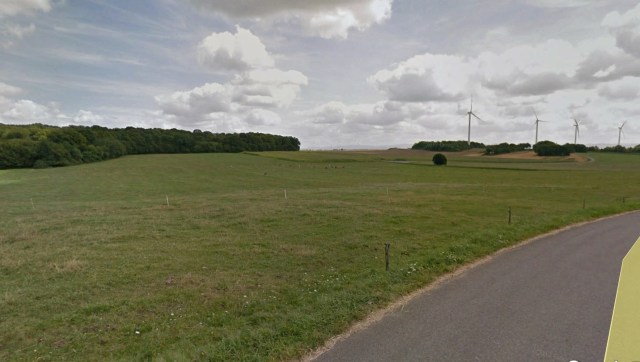
As the Canon company moved into position, they were able to assist the offensive actions of Third Battalion. Company K moved out of Igney and attacked Hill 355, located to the south-west of Foulcrey. In the photo below you can make out the same wind turbines from the photo above and, thanks to Google Earth magic, you can see the strategic importance of this position as it has a commanding view of Foulcrey (circled in red).
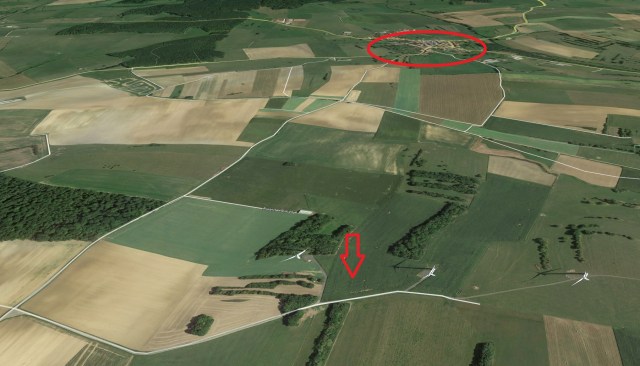
Companies L and M moved even farther to the east, bypassing the objective and taking high ground to the southeast of Foulcrey. Again, modern improvements make the location easily identifiable as wind turbines sit where the 71st dug in some 74 years ago.
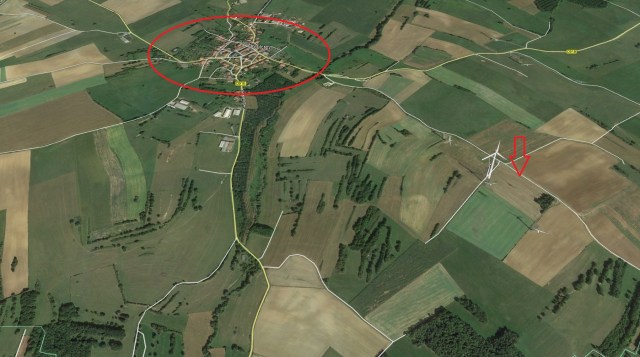
With the Canon company set up outside Igney and Third Battalion holding high ground around Foulcrey, the stage was set for a full Regimental assault on Foulcrey and continued advances to the east.
 Pro Aris et Pro Focis