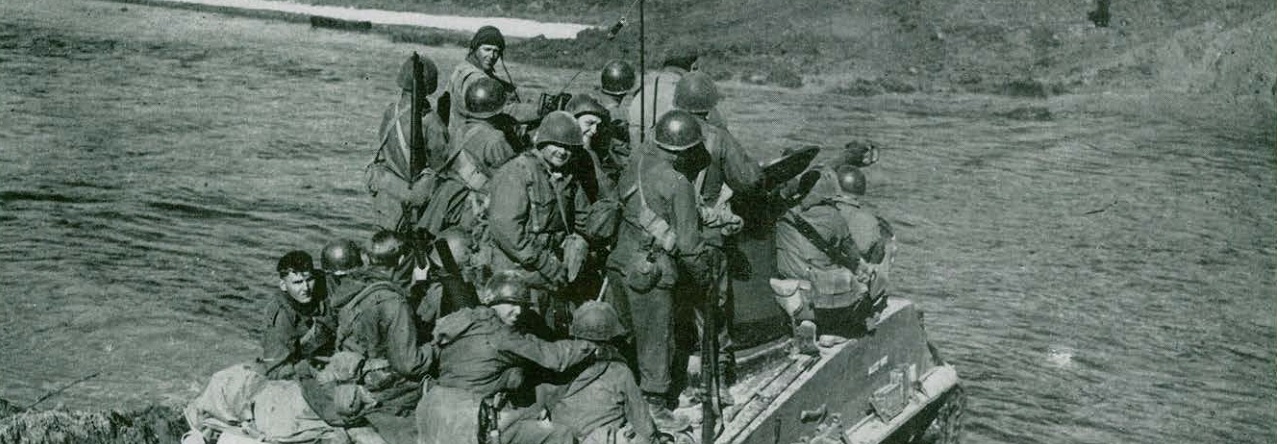
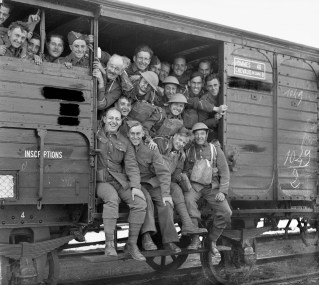
 On October 10th, Dan and the men of the 71st were introduced to European travel by way of the “40 and 8” box car. This narrow-gauge boxcar was “given” its name based on the stenciled capacity on the side: “40 Hommes/8 Chevaux” or “40 men/8 horses”. The men were crammed into these boxcars like these British soldiers (note the stencil to the left and above the door).
The train meandered its way through the newly-liberated French countryside, likely passing through the west and southern outskirts of Paris. The 44th Division kept moving along for the next eight days, finally arriving at the town of Marainviller on October 18th. The motorized convoy left Montebourg two days after the trains, arriving at the same time.
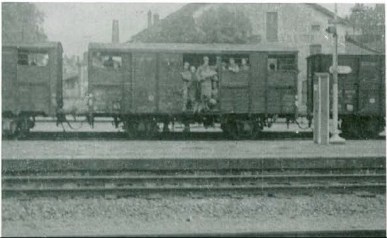
At this point in the fall of ’44, the Allies had pushed the Germans back, liberating a large percentage of France in “the pursuit to the Western Wall“. General Alexander Patch, commander of the 7th Army, had landed at St. Tropez and St. Raphael on the Mediterranean coast of France and raced northward, meeting the Allied forces advancing south and east from Normandy. His command was now the southern flank of the allied front. The fresh but untried 44th Division, was about to step in to the line to relieve Patch’s weary troops. The 79th Infantry had recently taken high ground near the French town of Emberménil and dug in to defensive positions. In the distance loomed the Vosges mountains and the defensive Maginot Line now turned to prevent the Allies from advancing into Germany. The 71st would be relieving the 79th.
Once arriving near the front, the 71st established a temporary headquarters position just outside Marainviller.
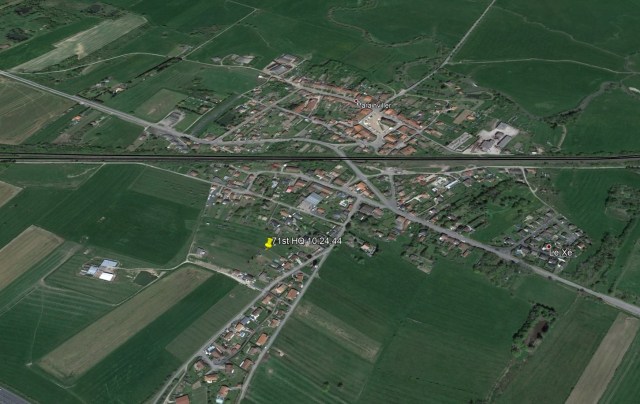
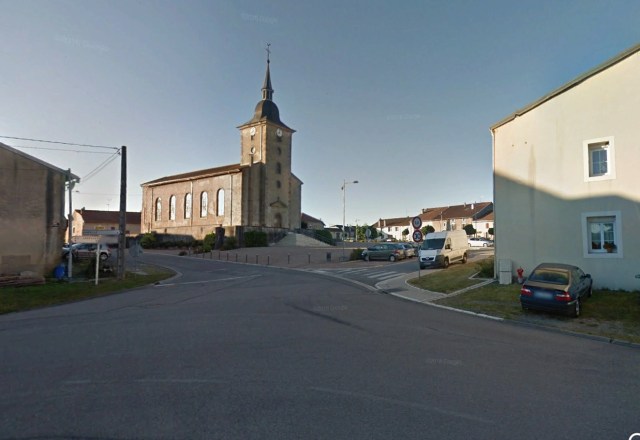
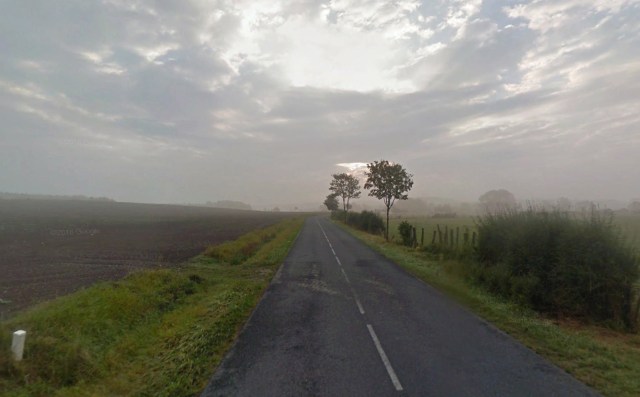
They relocated to the town of Laneuveville the next day, October 25th.
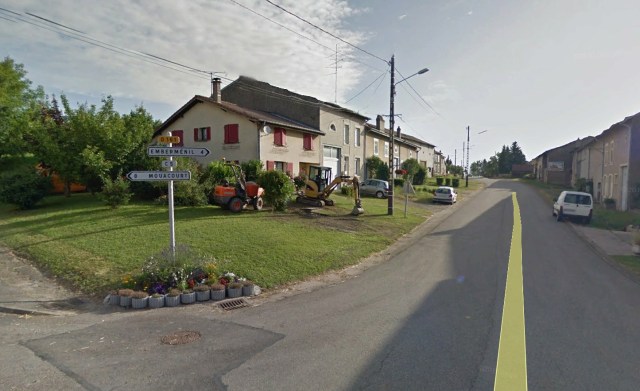
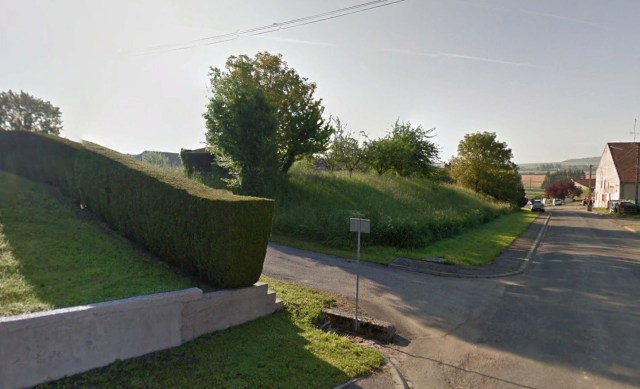
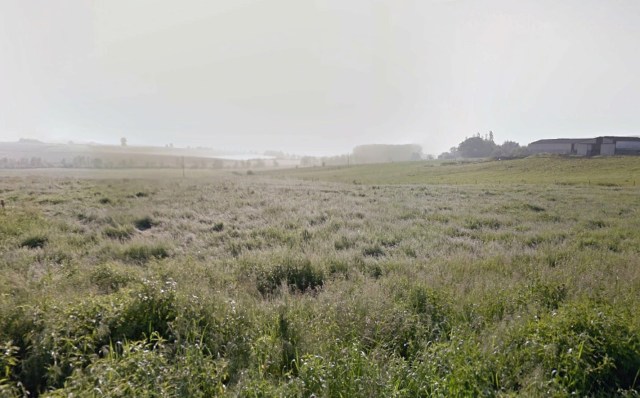
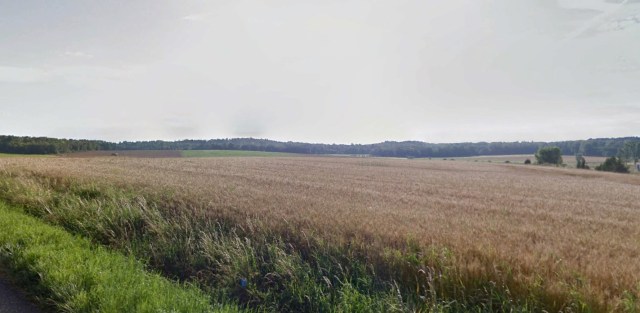
Artillery had set up on a high ridge to bombard enemy positions in and around the town of Lientrey and the surrounding wooded areas of the Foret de Paroy. In 2018 the area is a large open farm field. It’s reasonable to expect not much has changed as the S-3 reports for the Cannon Company begin to complain of “mud very bad in area” on October 28th.
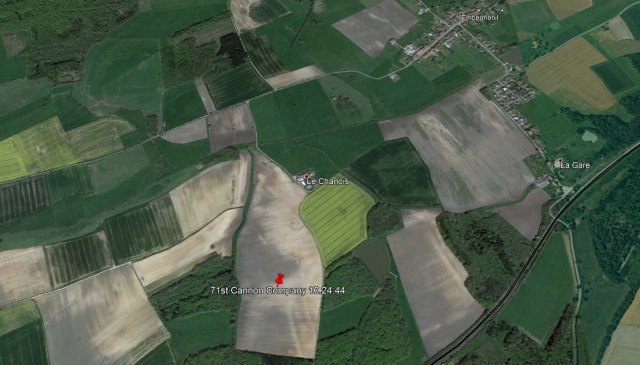
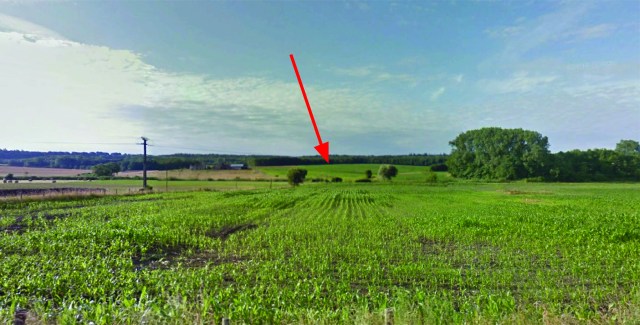
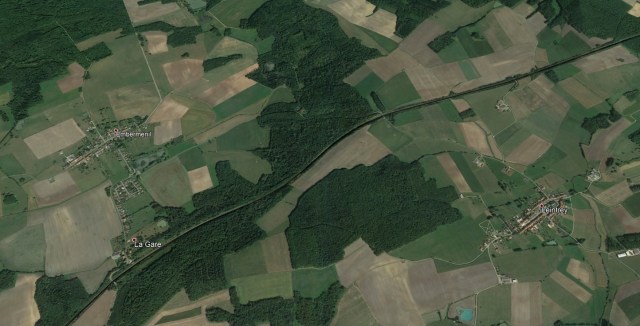
The forward Division Command Post and the active duty Companies were in and around the village of Emberménil. The Germans were dug into the Foret de Parroy (Parroy Forest) about 3/4 of a mile in front of them. Rear elements, including artillery and mortars, were in the town of Lientery, about another 3/4 of a mile to the east.
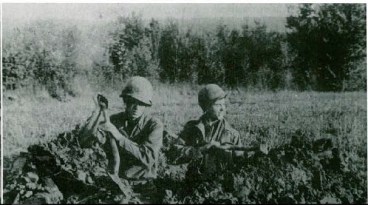
The last few days of October are recorded as “a long ordeal of foggy rain and soggy mud” in the Regimental history. Days were spent in water-filled foxholes with artillery barrages exchanged between both sides. Night patrols were sent to ascertain enemy positions in the forest and take targets of opportunity. One interesting story comes from the S-3 reports:
“Private Otis A. Garner, 22, Company “I”, 71st Infantry, an expert with the M1 rifle, has been conducting his own personal hunting expeditions against the Germans for so long that his platoon leader finally had to put a stop to it.
For example, one morning he found Garner on a little knoll far in front of his own lines. Garner motioned to a point a few hundred yards ahead where a solitary German could be seen industriously chopping down trees. The Missouri soldier waited until the German had neatly hewn the logs to foxhole size, then squeezed off a single shot. Result: one German less between us and victory, one high-grade foxhole cover trimmed with Teutonic thoroughness.
The platoon leader decided that it was all right this time, but from now on Garner would stay with his company. So he promoted the Missouri boy to Sergeant and now, come what may, Sergeant Garner must do his hunting with the company.”
Such were the opening lines of the story this brave division was about to write in the larger history of the war. A war to liberate a conquered continent, end a genocide unparalleled in scope, and preserve freedom in the face of evil.
 Pro Aris et Pro Focis